Primary Impact Crushers
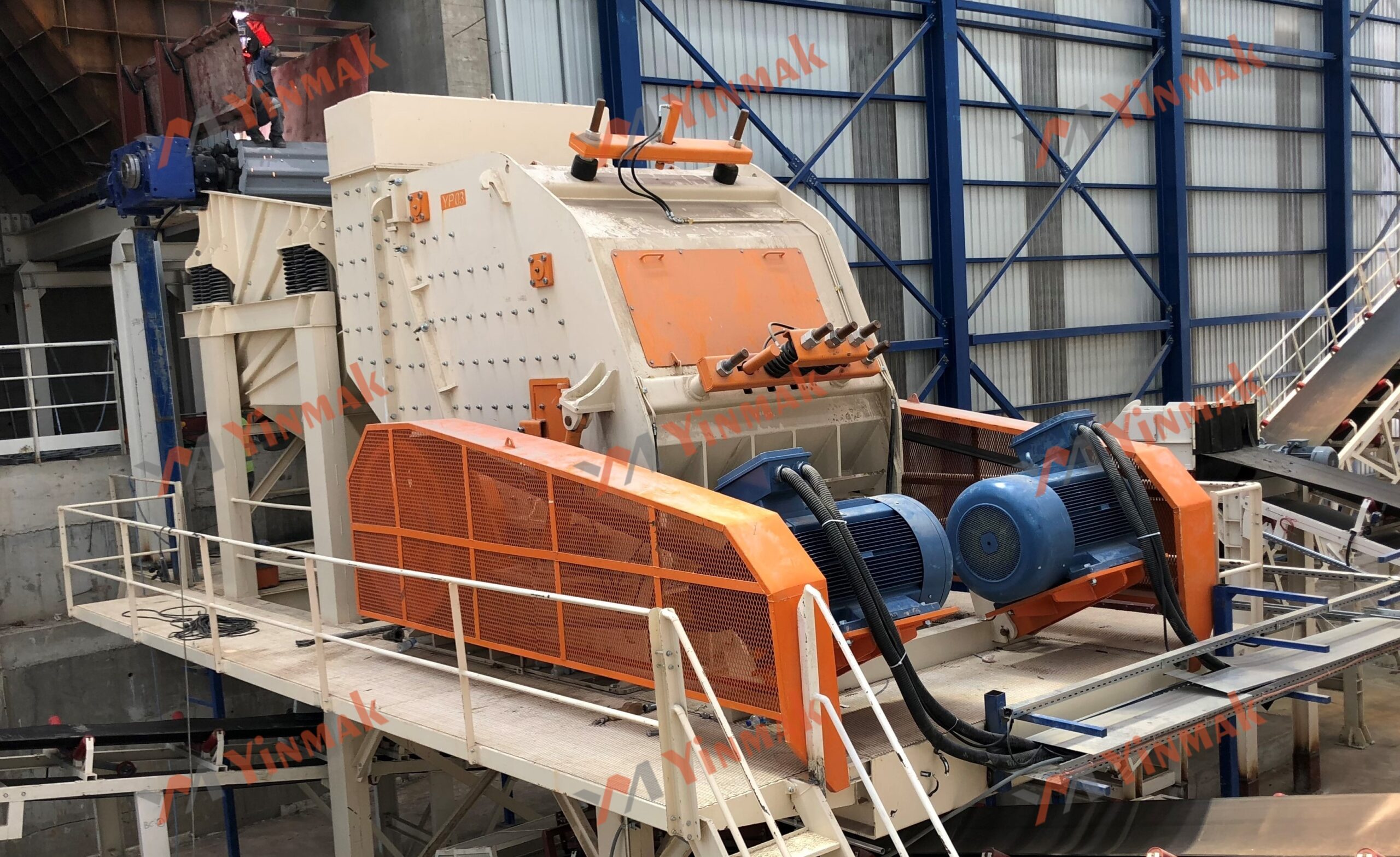
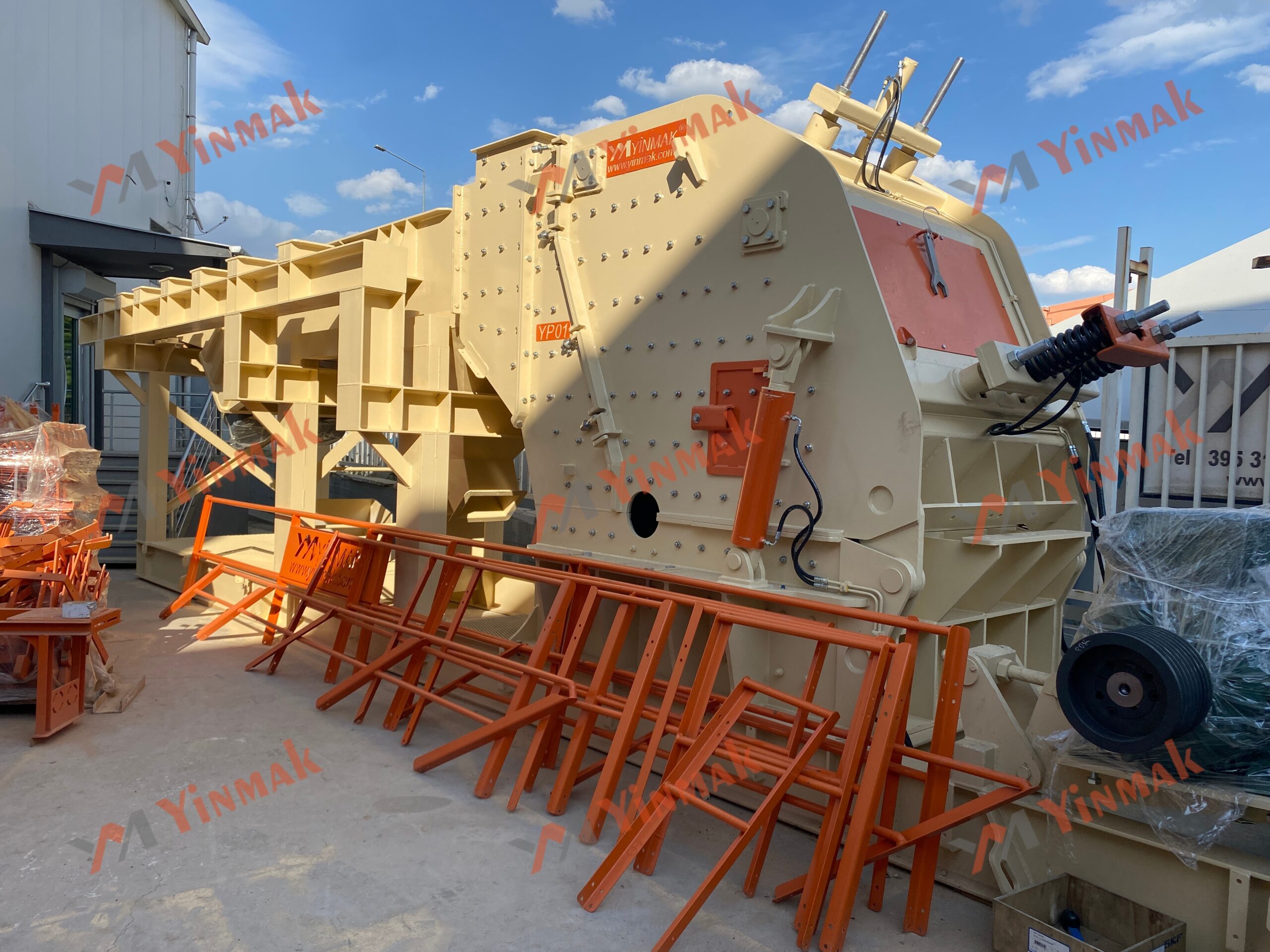
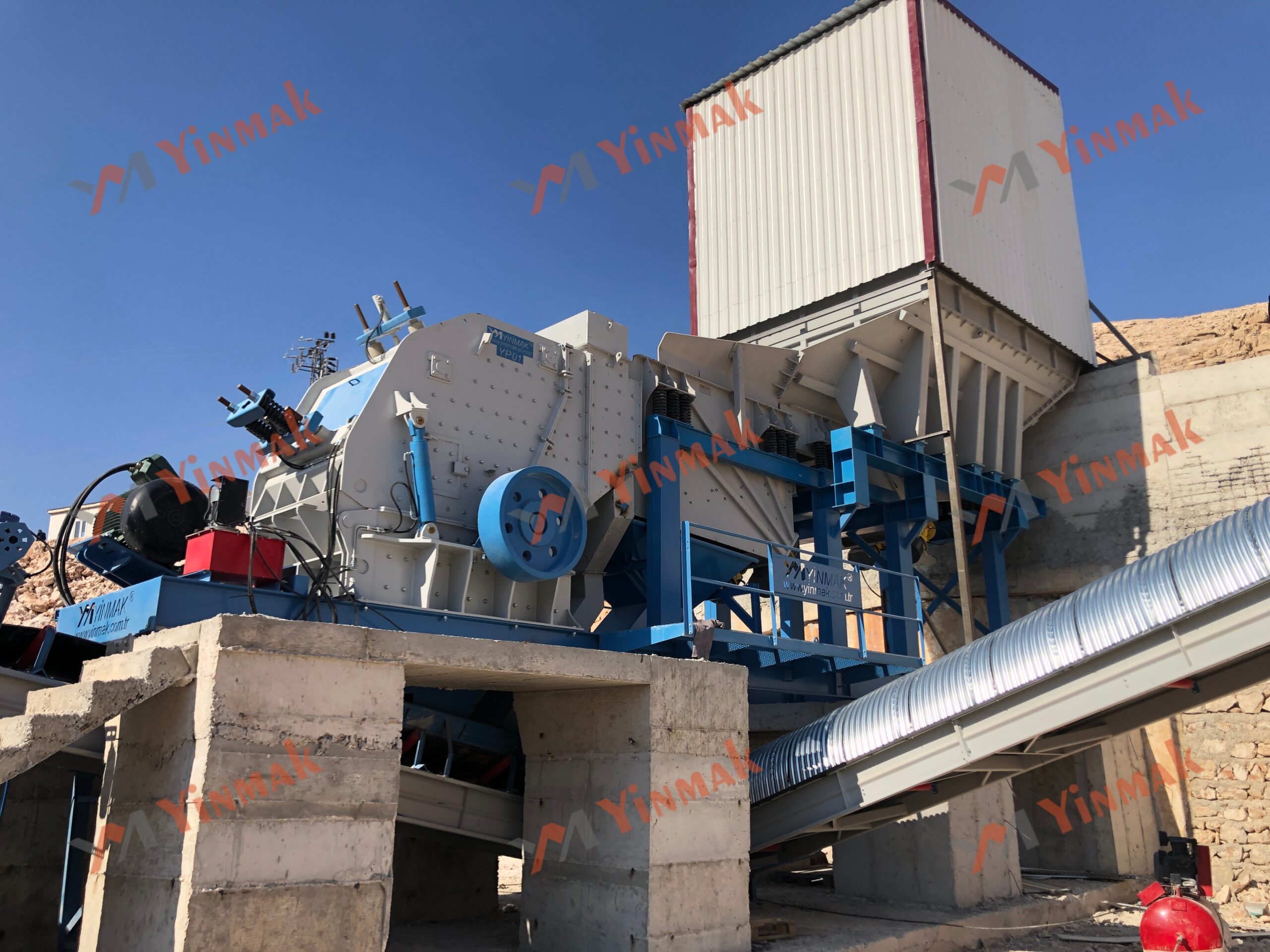
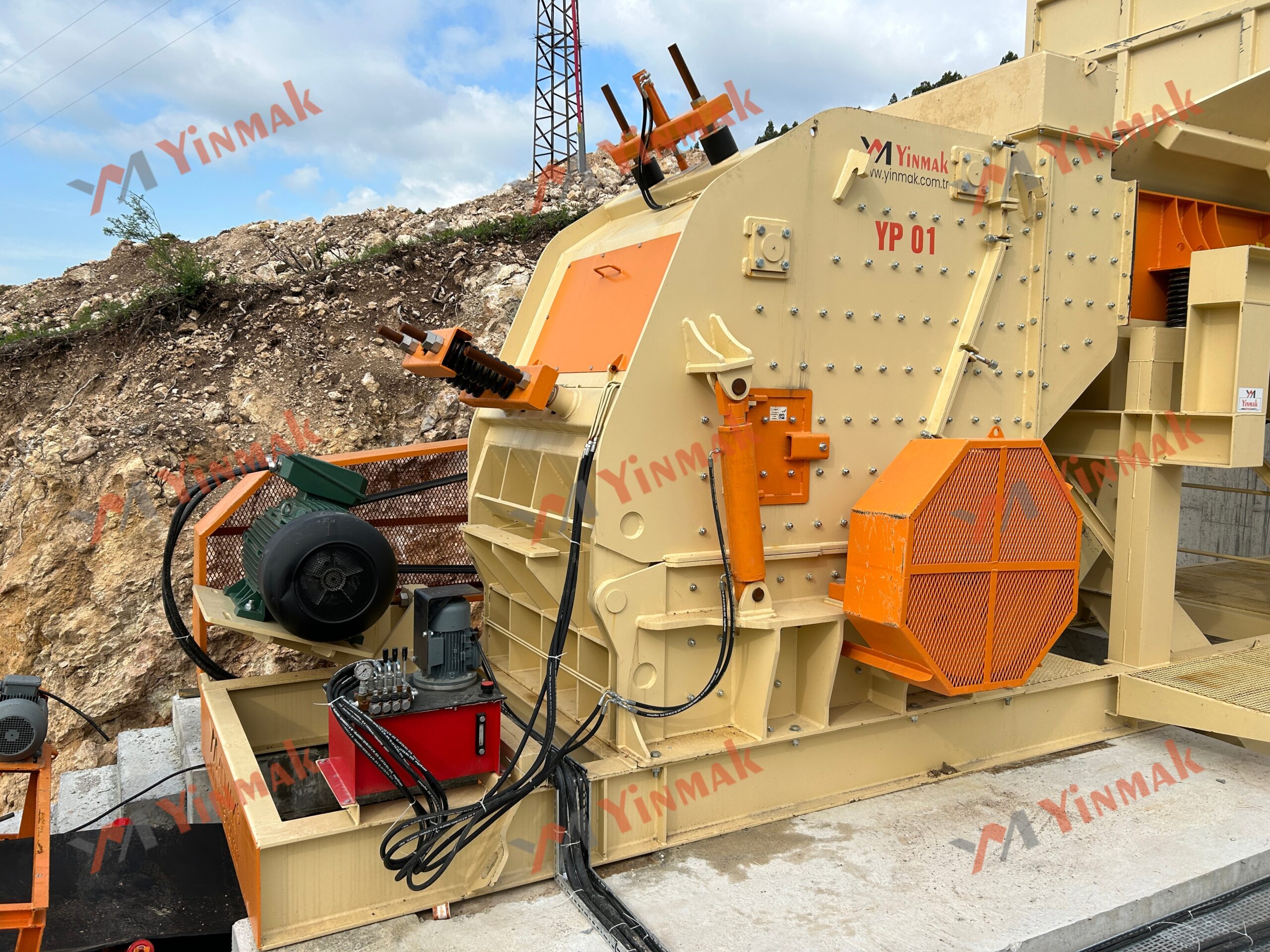
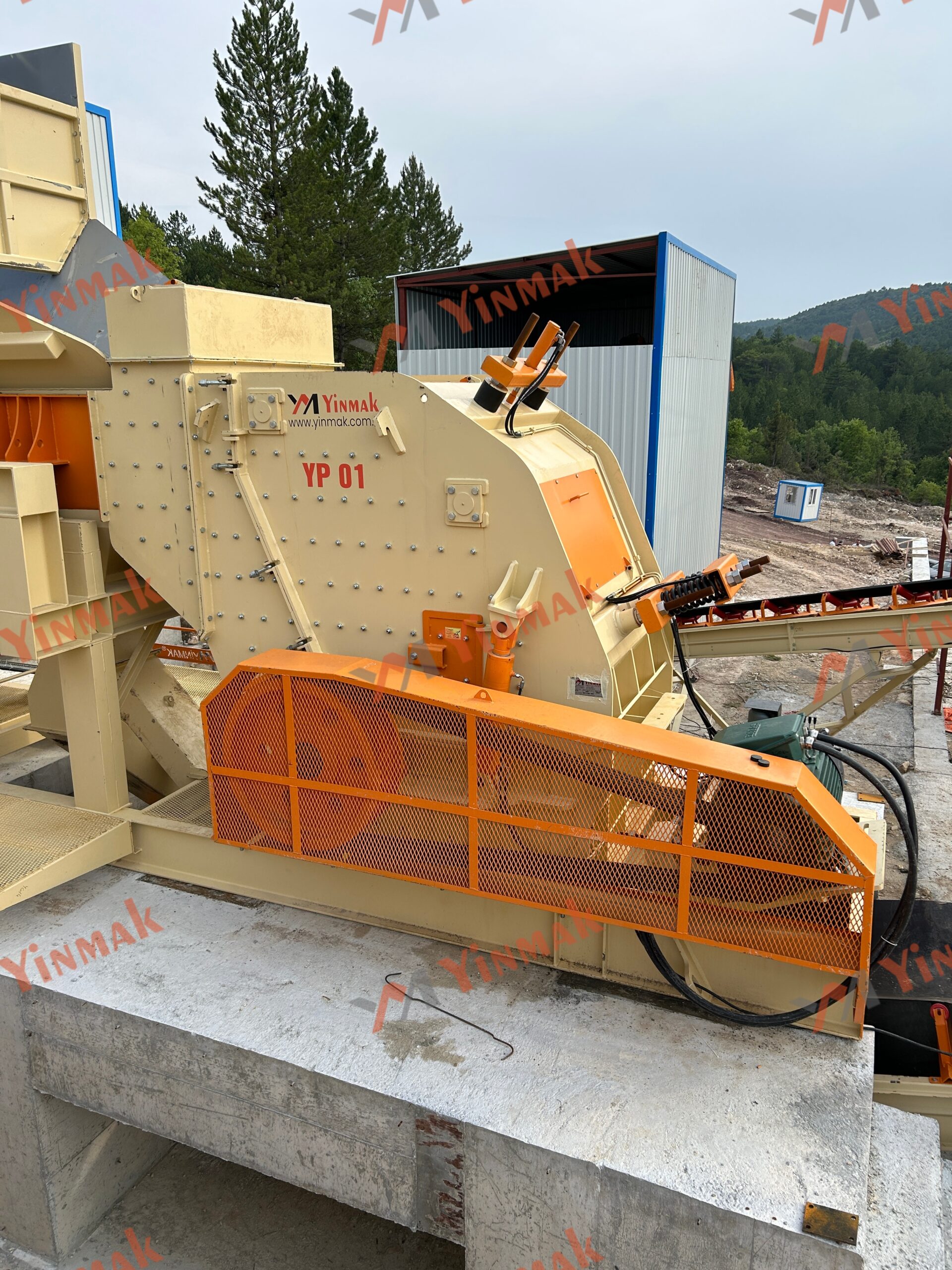
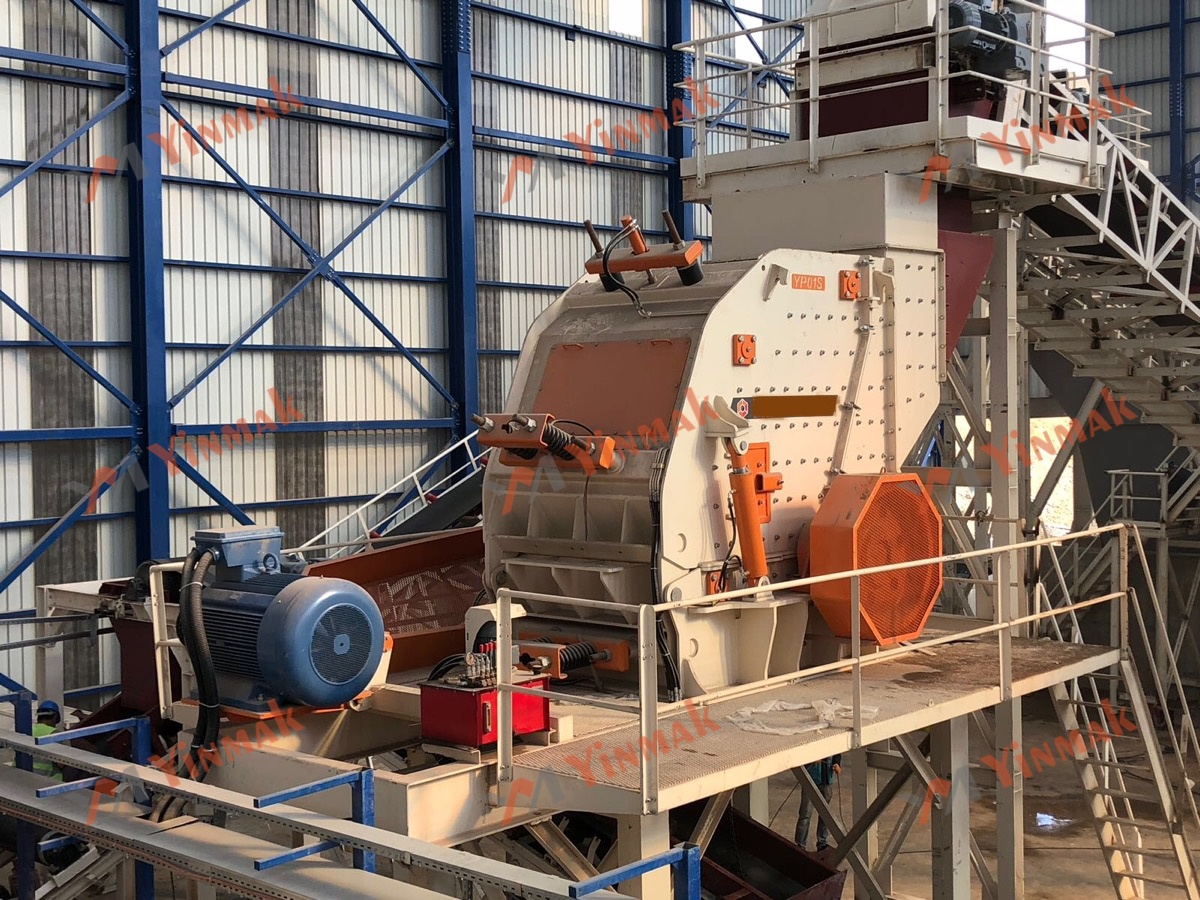
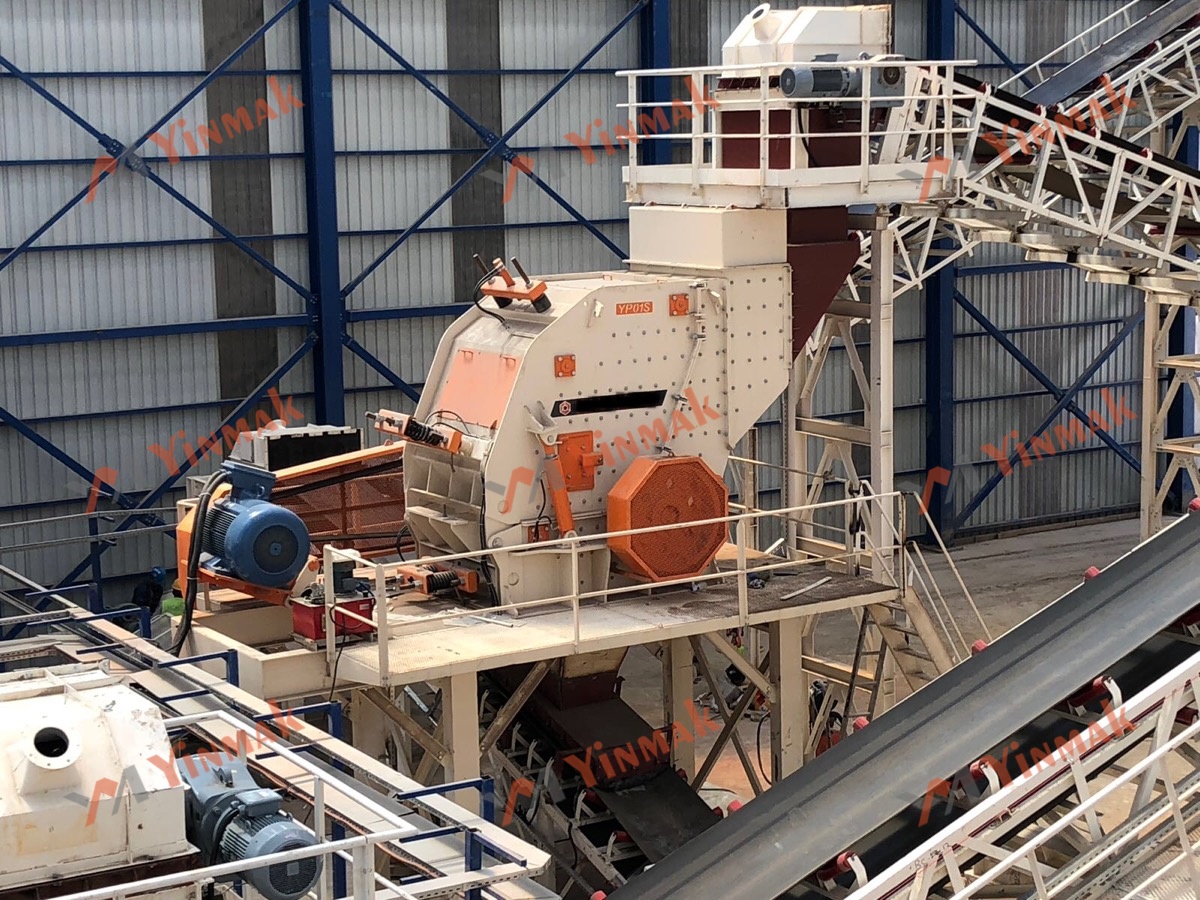
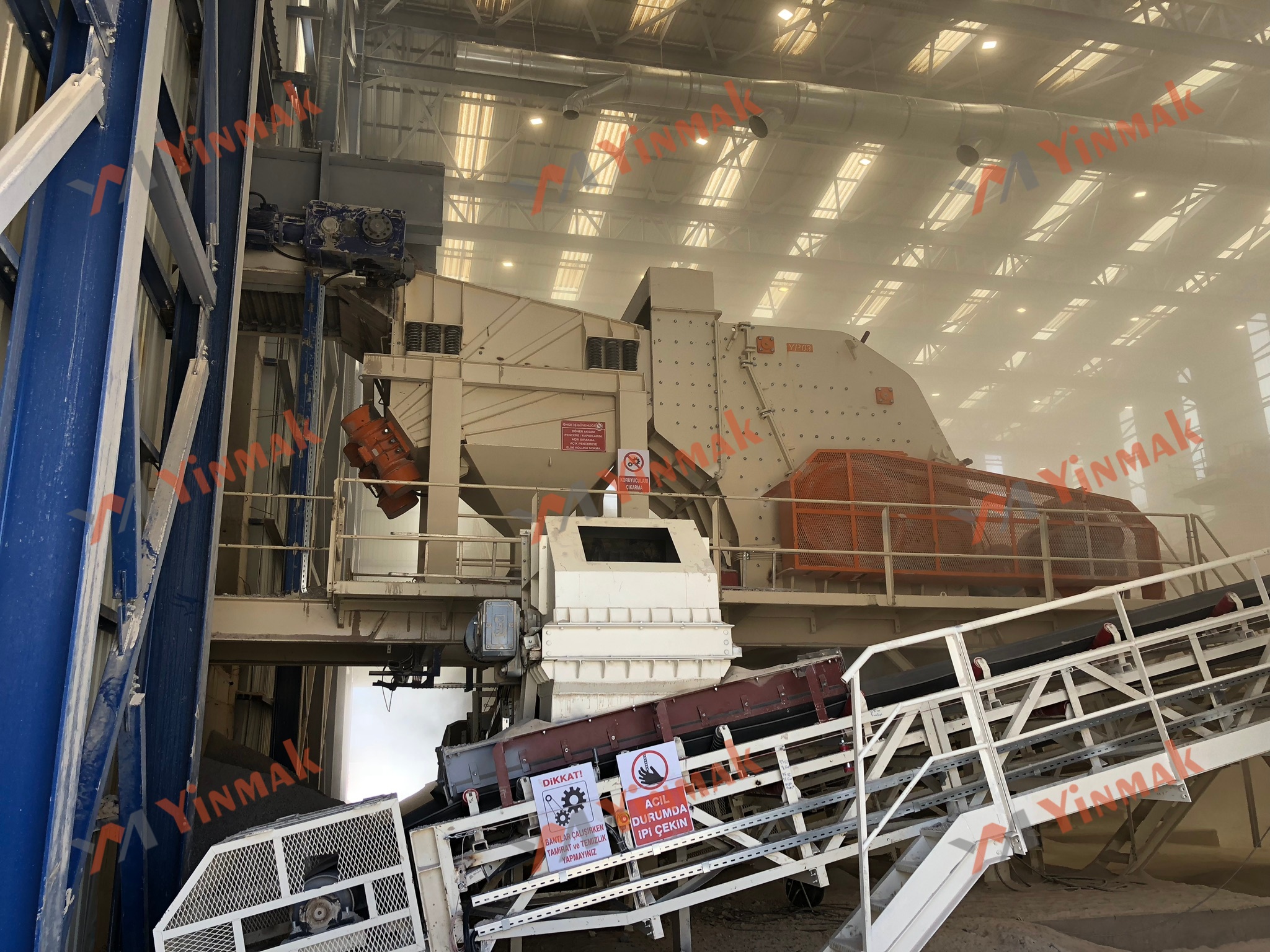
The YP series primary impact crushers are used as a primary crusher to crush soft or medium hard and non abbrassive materials. The dimension of final crushed product can be somewhat controlled. These crusher which are produced in several different sizes are driven by an electrical motor via V-belt and pulley.
General Features
* Ease of installation.
* Ease of operation and maintenance.
* High capacity and performance.
* Wear resistant high manganese alloyed hammers.
* Easy access to the inside of the crusher by hydraulically operated door assembly.
* Easy adjustment of breaking plates by hydraulically operated system.
MODEL | YP 1413 | YP 1415 | YP 1418 | YP 1420 | YP 1620 | |
Capacity | t/h | 200 – 400 | 300 – 600 | 350 – 700 | 400 – 850 | 500 – 1.000 |
Rotor Dimensions | mm | Ø1.400 X 1.250 | Ø1.400 X 1.500 | Ø1.400 X 1.800 | Ø1.400 X 2.000 | Ø1.600 X 2.000 |
Drive Motor | kW | 200 | 250 | 355 | 400 | 2 X 250 |
Weight | kg | 23.000 | 28.500 | 32.000 | 36.500 | 45.000 |
L Dimension | mm | 4.100 | 4.100 | 4.100 | 4.100 | 4.400 |
W Dimension | mm | 3.750 | 3.000 | 3.250 | 3.000 | 3.520 |
H Dimension | mm | 3.600 | 3.600 | 3.600 | 3.600 | 4.100 |
What is a Primary Impact Crusher?
Primary impact crushers are machines used in industrial applications such as quarries and mining to break down large stones and rocks into smaller, more manageable sizes. These crushers operate through high-speed rotating rotors equipped with impact bars (blow bars).
Working Principle
The working principle of primary impact crushers starts with material being struck by high-speed rotating blow bars mounted on a rotor. The material is accelerated by the rotating motion of the rotor and then hits the impact plates, breaking apart. This crushing process continues as the material repeatedly impacts between the rotor and the impact plates.
Key Components
- Feed Opening: The part where the material enters the crusher.
- Rotor: The high-speed rotating part to which the blow bars are attached.
- Blow Bars: Components that strike the material to break it.
- Impact Plates: Fixed plates where the material impacts and breaks.
- Adjustment Mechanism: Used to set the output size.
- Frame: The main structure where all components are mounted.
Advantages
- High Crushing Capacity: Effectively crushes large materials.
- Fine Material Production: Ideal for achieving the desired granularity.
- Easy Adjustability: Output size and granularity can be easily adjusted.
- Low Wear Costs: Durable blow bars and impact plates ensure long-lasting use.
- Efficient Operation: Provides a fast and efficient crushing process.
Applications
- Mining: Initial crushing of ores.
- Quarries: Crushing large stone blocks.
- Construction: Preparing construction materials.
- Recycling: Processing demolition and construction waste.
Technical Specifications
The technical specifications of primary impact crushers can vary based on the model and application area. Common specifications include:
- Feed Size: Maximum size of the material that the crusher can handle.
- Capacity: Amount of material processed per hour.
- Rotor Speed: Speed at which the rotor rotates.
- Motor Power: Power of the motor driving the crusher.
- Weight: Total weight of the crusher.
Types of Primary Impact Crushers
- Hydraulic Primary Impact Crushers: Feature hydraulic adjustment mechanisms for easier and faster adjustments.
- Mechanical Primary Impact Crushers: Operate with traditional mechanical adjustment mechanisms.
Conclusion
Primary impact crushers are essential machines for effectively reducing the size of large, hard materials to make them suitable for further processing. With high crushing capacity, efficiency, and durability, they are widely used in various industrial applications such as mining, quarries, and recycling. The adjustable output size and low wear costs make these crushers economical and user-friendly.